Searching for the best IPTV provider USA has to offer usually leads to the same frustrating scroll — dozens of sites all claiming to be the fastest, cheapest, and most reliable, with barely any real difference explained between them.When you add to that the idea of running an IPTV service for firestick, it can only leave you more bewildered than you were at the beginning.
But here are a few simple breakdowns of both.
What Actually Separates a Good Provider From the Rest
Licensed content, not just a big channel list. This is the part most comparison sites skip. Providers like YouTube TV, Sling, Hulu + Live TV, and fuboTV have real agreements with broadcasters — that’s why they’re still around years later. A service advertising “1000+ channels” for almost nothing usually can’t back that claim with proper licensing, and that’s exactly why those services tend to vanish without warning.
Stream reliability during peak hours. Anyone can watch a good stream at 2pm on a Tuesday. The real test is Sunday night football or a big live event. Check reviews that specifically mention performance during high-traffic times.
Transparent pricing. But if the price isn’t clearly visible on the site and you are pressured into using WhatsApp to get a deal, remember that is not a compliment.
Support that actually responds. Something will eventually go wrong — a login issue, a dead channel, a billing question. A provider worth paying for answers you back.
A real free trial. If they’re confident in the service, they’ll let you test it before you pay. No trial usually means no confidence.
Common Mistakes People Make While Comparing Providers
A lot of people judge purely on channel count, which is misleading — a bloated list full of dead links doesn’t beat a smaller, stable one. Others skip the trial period entirely because a deal looks tempting, which means they find out about buffering problems only after paying.A surprising number of people follow the provider’s own advice and stick to the provider’s homepage, where they’ll find testimonials, rather than go elsewhere to see what others have to say. Those add up to just a few minutes more and a lot less in the end.
Getting IPTV Service for Firestick Set Up Right
Firestick remains one of the easiest ways to stream IPTV in the US, mostly because it’s cheap and widely supported. Here’s the simple version of doing it properly:
- Update the Firestick first. Settings > My Fire TV > About > Check for Updates. Skipping this causes more app issues than people realize.
- Install through the Amazon Appstore. Most legitimate providers — YouTube TV, Sling, Hulu — have official apps available directly there. This is the safest route by far.
- Log in with your actual subscription credentials. Nothing fancy needed beyond that.
To get the smooth and ripple-free play of the content, it is recommended to set your display as per your TV resolution.
Don’t only test during off-peak hours of the network!
Take care when sideloading unofficial apps which are advertised as IPTV service for Firestick .Many users have wound up on unlicensed services this way without even knowing it.
All You Need to Know About IPTV Reseller World
IPTV Reseller World provides IPTV reseller solutions and additional services. This means that all customers who want to compare IPTV providers should know about IPTV Reseller World in order to include it in their comparison process.
Basically, before getting any IPTV subscription or reseller service, one should make some research about price plans, compatible devices, rules applied to the service, refund policy and licensing terms.
This is why one must always strive to opt for the service that has all the key features of high quality such as transparency, reliability, compatibility, excellent support and licensed content.
Selecting a Provider that You CAN Trust
Regardless of which player you compare, follow the same steps every time: See if they have a clearly listed price, a functional trial period (like StreamPro IPTV) or independent reviews to back up their claims, and do not hesitate to ask about their licensing of the content they’re offering.do independent reviews back up their claims, and can they explain their content licensing without dodging the question. A provider with nothing to hide will answer all four without hesitation.
Conclusion
At the end of the day, the best IPTV provider USA subscribers actually stick with isn’t the one with the flashiest homepage or the cheapest monthly rate — it’s the one that’s upfront about pricing, stable when it matters, and works cleanly with devices like IPTV service for Firestick .Take the time to read other reviews and do trial runs before you make your purchase this will save you lots of hassle in the future and is a little bit of work.
Frequently Asked Questions
1.What makes a provider the best IPTV provider USA has to offer?
Mostly transparency — clear pricing, licensed content, stable streams during busy hours, and support that actually responds when something breaks.
2.Are there any settings that need to be modified to make IPTV service work with Firestick?
Not at all. All you have to do is update your firestick, download app from Amazon Appstore and log in with your subscription.
3.So why would there be buffering even if I would choose a good provider?
The reason could be the Wi-Fi connection or network congestion during the peak hours.
4.Is it safe to install IPTV apps outside the Amazon Appstore?
Generally not a great idea. Sideloaded apps are one of the easiest ways to end up on an unlicensed service without realizing it.
5.Should I trust a provider with no free trial?
Be cautious. A provider confident in their service usually lets you test it first — no trial at all is worth thinking twice about.
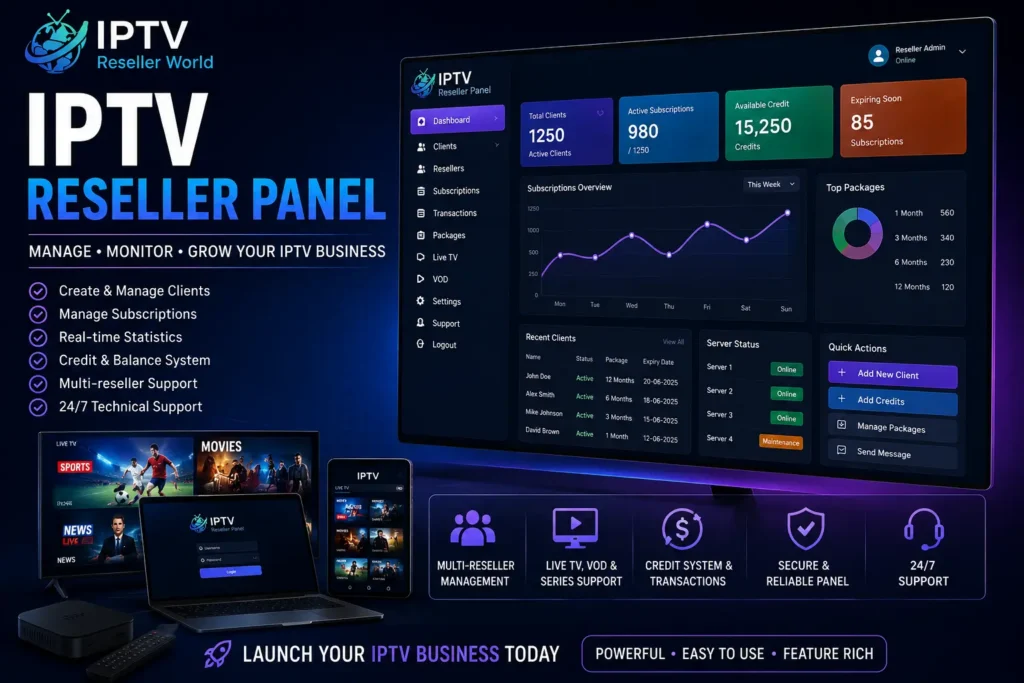
 In the streaming world, your reputation is everything. When your channels are slow or your server is down, your customers will seek out other channels. That’s why it’s essential to select a quality backbone. You need a provider that updates the channel list regularly and maintains good video quality throughout the day, especially during peak hours. As they say, there’s no better way to learn this trade than through experience. You will see that in most cases, you could be best off giving them clear instructions on how they can set up the IPTV player on their particular gadget to minimize support tickets. It’s a huge benefit when you make a cable or satellite transition smooth and intuitive.
 Technology is never perfect, and you will eventually hit a snag. Maybe a server update slows down the load times or a specific app suddenly stops working on older smart TVs. In this way, it is during these moments that you will make it count. Rather than relying on customer feedback to know about all of the tiniest problems, monitor industry forums and tech groups. There are times you’ve got a problem that somebody else has already solved. The first to alert your users to a fix, or give them a simple workaround, makes you appear the expert. Always have your setup documentation up to date and ready to hand in case you need to send it out within a heartbeat to save your customer’s time and thus earn their loyalty.
 Most newcomers treat their budget like a bottomless pit, buying credits whenever they get a lead. That is the fastest way to kill your margins. You have to analyze your churn rate and your acquisition cost. If you know that 40% of your customers tend to renew for three months rather than one, you should be tailoring your credit purchases to match those habits.
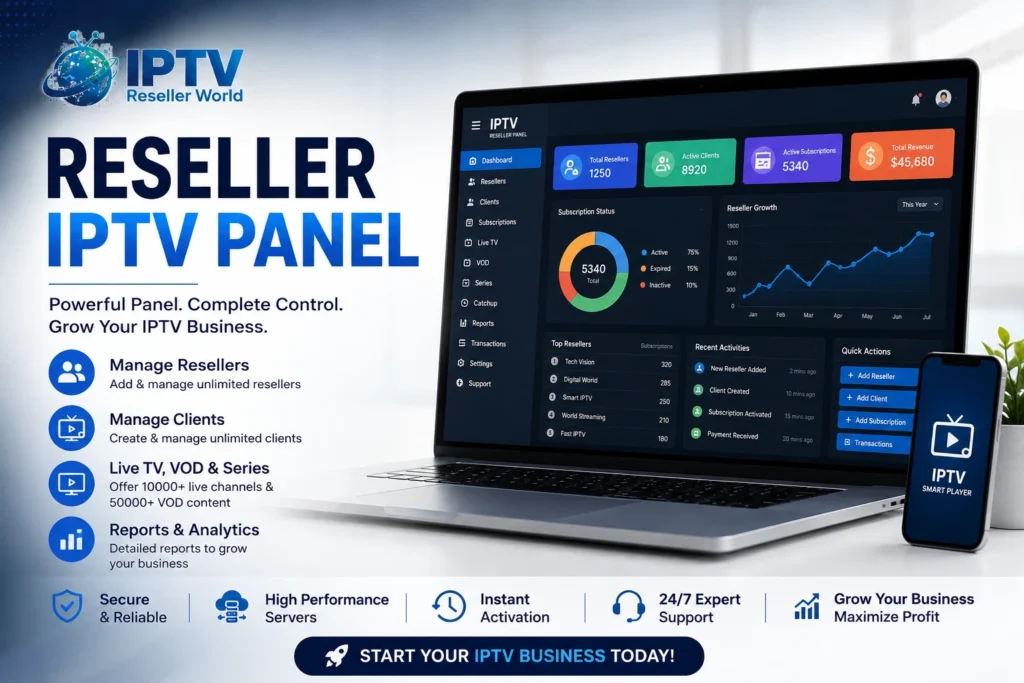
 Building a sustainable operation requires moving away from manual work as soon as possible. You should be looking for a backend that handles the heavy lifting of renewals and expiration warnings automatically.
 The internet is full of claims about “the best” service, but you need evidence. Look for providers that are transparent about their operations. Do they provide a status page for their servers? Do they have a clear channel for support when you have a question?
 You would think you are offering a subscription, but you’re really selling your own brand. People will not purchase from a random website that appears to be unfinished or a piece of work created in a basement. Take some time to work on your personal messages. Make sure you are clear about what you are providing, how they can pay you and how they can contact you. With a consistent voice as a professional, you will win better clients who are willing to pay for quality. You are not a reseller; you are the link between your customers and their entertainment. Take control of it, and your business will accelerate quicker than you think.
 Consistency is the name of the game. Do not try to be everything to everyone. Find a niche. Maybe you focus on sports fans who need rock-solid feeds, or perhaps you target a specific language group that local providers underserve.